How Cleveland’s New Head Coach Maps to the Four Traits That Survived the 44.1 Grade
The Millennial Scout
The Most Aligned Coach-QB Fit Cleveland Has Had in a Decade
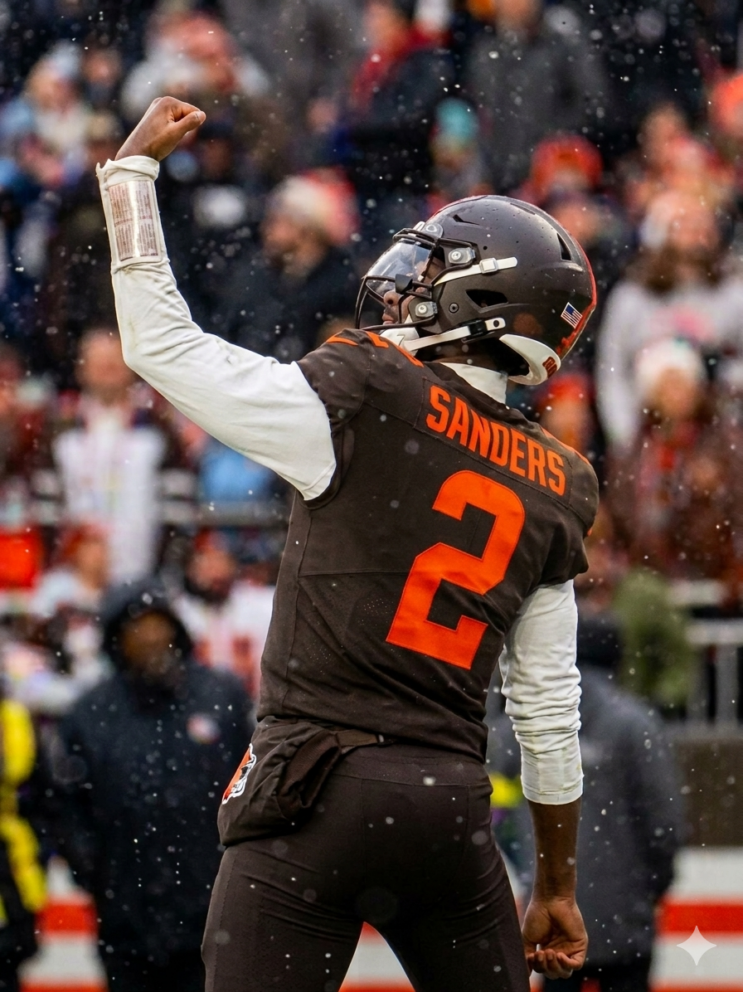
When the Browns fired Kevin Stefanski on January 5, 2026, and hired Todd Monken three weeks later, the football media framed it as a mid-tier head coach hire for a 5-12 team that had just bottomed out. That framing missed the actual story. Monken’s offensive resume happens to map almost trait-for-trait onto Shedeur Sanders’ specific developmental profile. This is not a generic offensive guru landing on a generic young quarterback. This is a coach whose three most recent assignments produced exactly the kind of QB transformations Sanders needs.
The thesis of this piece is simple. The Year 2 leap is not just possible, it is structurally engineered into the hire. The question is whether the Browns front office finishes the job by investing in the line and the receiver room.
Monken’s Resume, in the Order That Matters Here
Forget the chronology. The four assignments to evaluate, ranked by relevance to the Sanders development question:
1. Ravens OC (2023-2025): The Lamar Jackson Transformation. This is the most directly applicable piece of the resume. When Monken arrived in Baltimore in 2023, Lamar Jackson had not eclipsed 3,000 passing yards since 2019. The Ravens’ passing game had been described, accurately, as one of the league’s most dynamic, rushing quarterbacks running an offense that did not actually develop him as a passer. Greg Roman’s offense was simple, predictable, and dependent on Lamar’s legs. Monken changed all of it. The 2023 line: 3,678 passing yards, 67.2% completion, 24:7 TD-to-INT, 102.7 passer rating, second NFL MVP. The 2024 follow-up: career-high 4,172 passing yards, 41 touchdown passes, 4 interceptions. The Ravens led the NFL in offensive yards in 2023 and ranked first in DVOA for most of 2024. The most important quote from the Lamar transformation, from The Baltimore Banner in November 2024: “Jackson is elite when pressured and when not pressured, elite in the shotgun and under center, elite on throws outside the numbers and inside the numbers.” Read that quote again with Sanders in mind.
2. Georgia OC (2020-2022): The Game-Manager Championship. Two national championships back to back, with Stetson Bennett at quarterback. Bennett was not an elite physical talent. He was an accurate, cerebral, system-fitting passer who needed an offense designed to leverage his ability to read coverage and put the ball in the right spot. That description fits Sanders verbatim. Monken won two natties with that QB profile. The Georgia offense ran a balanced attack with heavy play-action, RPO commitment, and downfield shots when the run game forced single coverage. The exact recipe Sanders needs.
3. Tampa Bay OC (2016-2018): The Volume Passing Years. With Jameis Winston at quarterback, the Buccaneers led the entire NFL in passing yards over those three seasons (14,130 total). The 2018 Bucs ranked first in the franchise’s history in yards per game at 415.5. Mike Evans hit 1,000 yards in all three years and earned his first two Pro Bowl selections. This stretch matters less for the schematic blueprint and more as proof Monken can architect a high-volume passing offense when the situation calls for it.
4. Browns OC (2019): The Run-Game Foundation. Nick Chubb finished second in the NFL in rushing yards (1,494) and the Browns ranked fourth in yards per rush (4.8). Single year, fired with the rest of the staff, but it established that Monken can run a top-tier ground game when given the personnel.
The composite picture: a coach who has built the volume passing version of the offense (Tampa Bay), the championship game-manager version (Georgia), the elite-rushing-foundation version (Browns 2019), and most recently, the QB-development version (Ravens 2023-2025). All four pieces are needed to fix what the Browns offense was in 2025.
The Lamar Transformation, Translated to Sanders
The specific things Monken did for Lamar Jackson, with the corresponding Sanders need next to each:
| What Monken Did for Lamar | The Sanders Translation |
|---|---|
| Spread the field with motion and formation diversity to give the QB time to see routes develop pre-snap | Sanders’ pre-snap read trait was buried under Stefanski’s 71% pass rate on 3rd-and-long. A spread base will let his pre-snap diagnosis trait actually show up |
| Increased quick-game throws under 2.5 seconds (Lamar had highest EPA per quick throw in the league in 2024) | Sanders’ 91% college short-game accuracy got reduced to small volume because Stefanski didn’t call rhythm passes for him. Quick game protects the line and unlocks the trait |
| Built explosive-pass concepts off play-action and bootlegs | Sanders’ 6th-in-NFL explosive plays per game number came mostly from off-script extension. Designed explosives would compound that |
| Made Lamar elite both under center and in shotgun | This is the under-center timing fix. See the companion piece on the technical adjustment |
| Diversified coverage attacks (Lamar in 2024 ranked 90th-percentile or better against every coverage) | Sanders was two beats late on intermediate throws against zone. Monken’s offense gives him formation answers to every look |
| Reduced TWP rate to 1.7%, lowest of Lamar’s career | Sanders already had a low TWP rate at Colorado at 1.2%. Monken’s structure protects that trait |
Six of the six things Monken did for Lamar Jackson map directly onto Sanders’ developmental needs. There is no single QB-coach fit in the league this offseason that is closer than this one.
The Four Traits, Year 2 Application
This section connects the original four-trait scouting framework directly to what the Monken offense will allow each trait to express.
Trait 1: The It Factor and Impact
Monken’s history with team-first leader-type quarterbacks (Stetson Bennett at Georgia, the way Lamar’s locker-room standing grew in Baltimore) suggests he runs a system that rewards the kind of leadership intangibles Sanders flashed at Jackson State and Colorado. The Pro Bowl alternate selection in his rookie year, with the worst possible situation, is the leading indicator that this trait survived. Monken’s offense will let it scale.
Year 2 expression: Sanders becomes the unquestioned offensive leader by midseason, the way Lamar’s leadership grew under Monken in 2023. The locker-room buy-in that the Stefanski staff didn’t fully give him gets baked in by the new coaching staff from Day 1.
Trait 2: Toughness
The Lamar Jackson transformation under Monken specifically reduced Lamar’s exposure to hits. Quick game, designed motion, and play-action all reduced the time the QB held the ball and the predictability of pass plays. Sanders survived a 46% pressure rate, the highest of the Next Gen Stats era. He does not need to keep proving the toughness trait. He needs Monken to engineer an offense that doesn’t ask him to.
Year 2 expression: Pressure rate drops from 46% to 30-32%. Sack rate drops from 7.7% to 5-6%. Time-to-throw drops from 3.39 to 2.7-2.8 seconds. The trait is no longer the headline. It just becomes the floor.
Trait 3: Feel for the Game (The Tarkenton Element)
This is the trait Monken is most dangerous with. The Ravens 2023-2024 offense was built specifically to leverage Lamar’s improvisation while putting structure around it. Monken does not coach scrambling out of his quarterbacks. He builds in escape valves and designed extensions that let the QB’s feel manifest within the system rather than fighting against it. Sanders’ Tarkenton-style play extension, 22.3% of dropbacks held longer than four seconds (highest in the league), 11.5% pressure-to-sack rate (well below average), produced 3.86 explosive plays per game (6th in the NFL). Monken’s offense gives that trait structure without taking it away.
Year 2 expression: Designed bootlegs, half-rolls, and movement passes give Sanders the platform for play extension that his college tape promised. Explosive plays per game stay at 3.5 or higher even with reduced pressure, which is what separates him from the median NFL quarterback.
Trait 4: Pre-Snap Read and Field Vision
This is the trait Monken’s offense is specifically designed to expose. The Lamar transformation included formation diversity that gave Lamar more pre-snap information than Roman’s offense ever had. Monken trusts the QB to read the field and audible. Stetson Bennett ran a similar pre-snap system at Georgia. Sanders’ pre-snap diagnosis trait, evidenced by his 78.0 PFF passing grade against the blitz in his first start, will go from a partial-credit trait in 2025 to a featured trait in 2026.
Year 2 expression: Audible rate climbs significantly. Pre-snap motion creates coverage tells that Sanders converts into explosives. By midseason, defenses have to disguise more aggressively against Cleveland because Sanders is reading them faster than Stefanski’s offense ever let him.
Investment Priorities for the Front Office
Andrew Berry has already said publicly that the offense will receive “significant investment” in 2026. Here is what that investment needs to look like in priority order:
1. Offensive line, specifically the interior. Cleveland’s line gave up pressure in 2.25 seconds when the league average was 2.65. The 46% pressure rate is the single biggest reason the rookie tape looks the way it does. Two starting-caliber interior linemen (a guard and a center) is the floor. Without this, none of the rest matters. Monken’s system, even at its quickest, needs the line to win for 2.4-2.5 seconds for the full route tree to develop.
2. WR room (substantially addressed in the 2026 draft). Sanders’ WR1 in 2025 dropped 9.1 passes per 100 targets. Gabriel’s WR1 on the same team was at 4.8. The Browns made this the focus of the 2026 draft. KC Concepcion came off the board at #24 in the first round (Texas A&M, 61 catches for 919 yards and 9 TDs in 2025, plus 10 carries for 75 yards and a rushing score). Denzel Boston came at #39 in the second round (Washington, 132 career catches, 1,781 yards, 20 TDs across four seasons). The fit is specific to Monken’s offense in both cases. KC is a YAC-focused slot-flanker, the same role Zay Flowers plays in Baltimore, and Monken made the comp himself at his introductory press conference: he said KC’s practice habits and personality remind him of Zay specifically. Denzel is a 6-foot-4 contested-catch boundary receiver, exactly the profile that helps Sanders attack his weakest college zone (over the middle, 73.7% accuracy) and his rookie-year red-zone struggles. The remaining question is whether Jerry Jeudy ascends back into a true alpha role or whether the offense runs a balanced KC-Jeudy-Denzel trio with no single WR1. Either path is a meaningful upgrade from the 2025 starting group. This is the priority that just got handled.
3. A reliable run game. Quinshon Judkins flashed in his rookie year. Monken’s 2019 Browns ran for 1,494 yards behind Chubb. The Ravens led the NFL in rushing under Monken in 2023. The structure exists. The investment is about depth and an offensive line that can actually run the wide-zone scheme Monken prefers.
4. A pass-catching tight end. Lamar’s 2023 transformation was helped massively by having a real intermediate-middle-of-field target (Mark Andrews, when healthy). Sanders’ over-the-middle accuracy at Colorado was 73.7%, his weakest zone. A tight end who can win in that area becomes a force multiplier for both his accuracy and his anticipation development.
The order matters. With the WR room substantially handled by the draft, the remaining make-or-break investment is the offensive line. If the Haslams pull together two starting-caliber interior linemen in free agency or via trade, the structural floor for the Year 2 leap is set. The pass-catching tight end remains a Year 2-3 priority but is not immediate. Monken cannot fix the under-center timing if Sanders is throwing from a collapsing pocket every snap. He cannot fix the play-action commitment if defenses do not respect the run. The line is the one that matters now.
What the Year 2 Offense Should Look Like, Specifically
The schematic blueprint, if Monken runs the offense the way he ran it in Baltimore:
- Personnel: 11 personnel as the base (one back, one tight end, three receivers), with 12 personnel (one back, two tight ends, two receivers) as the play-action package. Heavy formation diversity within both groupings.
- Pre-snap motion rate: Top 10 in the league. This was a hallmark of the Ravens offense and a key reason Lamar’s pre-snap reads got faster. Sanders gets the same advantage.
- Play-action rate: 27-30% of dropbacks. The Ravens were 25-28% under Monken. Sanders had a play-action rate well below 20% for most of his rookie year. Bringing that number up alone should add 0.3-0.5 yards per attempt.
- Quick game (under 2.5s) rate: Top-five in the NFL. This is the thing that protects the offensive line and lets Sanders’ college short-game profile (91.6% on-target) re-emerge as actual production.
- Under-center percentage: 35-40%. The Ravens were around there. The Browns under Stefanski were heavier under center than that, but the rhythm and timing wasn’t there. Monken specifically can teach this part.
- Explosive pass concepts: Built off play-action and motion, not off Sanders extending plays out of structure. The off-script explosives stay because the trait is real, but the designed explosives are added on top.
The ceiling for that offensive structure is top-10 in scoring. The floor is top-20. Both represent a two-year pull from where Cleveland just was.
The Goff-McVay Analog, One More Time
The clearest historical comparison for what Monken can do for Sanders in 2026 is what Sean McVay did for Jared Goff in 2017. Goff went from 42.9 PFF passing grade as a rookie to 73.2 in Year 2. The Rams went from 4-12 to 11-5 and won the NFC West. McVay specifically built an outside-zone running scheme with bootleg play-action that turned Goff into one of the best play-action passers in the league. He fixed the under-center work that Cal’s Bear Raid offense had not asked Goff to do.
Monken’s resume is the AFC version of that exact arc. The Lamar transformation is documented. The Stetson Bennett game-manager championships are documented. The Mike Evans alpha-receiver development is documented. The Nick Chubb run-game year in Cleveland is documented.
The pieces fit. The hire is right. The remaining variable is whether the front office finishes the job.
What to Watch Through the 2026 Season
For the Sanders Year 2 evaluation, the leading indicators in priority order:
- Pressure rate and sack rate. If pressure drops from 46% to under 32%, the line investment worked.
- Play-action rate and effectiveness. If play-action volume hits 27%+ and his EPA per play-action snap is league-average or better, the technical concern from Year 1 is being fixed.
- Under-center pass attempts and timing. Watch the dropback footwork. If he is no longer a beat late on shorts and intermediates, the mechanical work has translated.
- Pre-snap audible rate. This is the leading indicator for the pre-snap read trait fully expressing itself.
- Yards per game. 240+ is the threshold. Lamar’s 2023 first year under Monken was 216 ypg. The expectation for Sanders should be higher because Monken is now in his second tour with the offense.
If three of these five trend in the right direction by midseason, the Goff Year 2 leap is on track. If four or five trend correctly, Sanders is in the conversation for top-12 quarterback by Year 3.
Final Read
The Browns hired the right coach. The QB-coach fit is the most aligned in the league this offseason. The four traits from the original Sanders scouting profile map directly onto what Monken’s offense unlocks. The Lamar Jackson transformation under Monken is the proof of concept. The Goff-McVay arc is the historical analog.
The only question left is whether the Haslams and Andrew Berry write the checks needed to finish the build. The line has to get fixed. The WR1 has to get acquired. The rest is on Monken and Sanders.
The pieces are sitting on the table. The 2026 season will tell us whether anyone in Berea is going to assemble them.
Sources: PFF player grades, Next Gen Stats, ESPN QBR, Tru Media advanced metrics via CBS Sports, The Baltimore Banner game logs and analysis, NFL.com transcripts of Todd Monken’s introductory press conference (April 25, 2026), and the Cleveland Browns official announcement of Monken’s hire (January 28, 2026).